Cryptoeconomics

News, data and analysis on tokenized assets, market design and digital economic systems.

Regulator

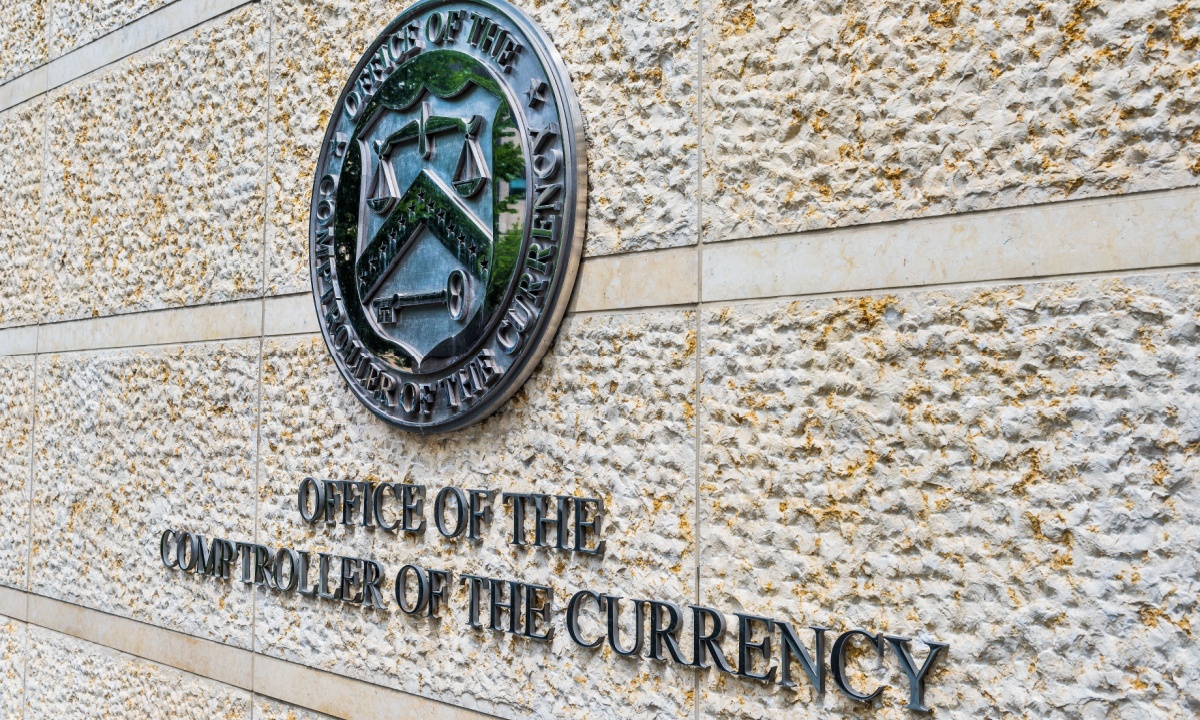
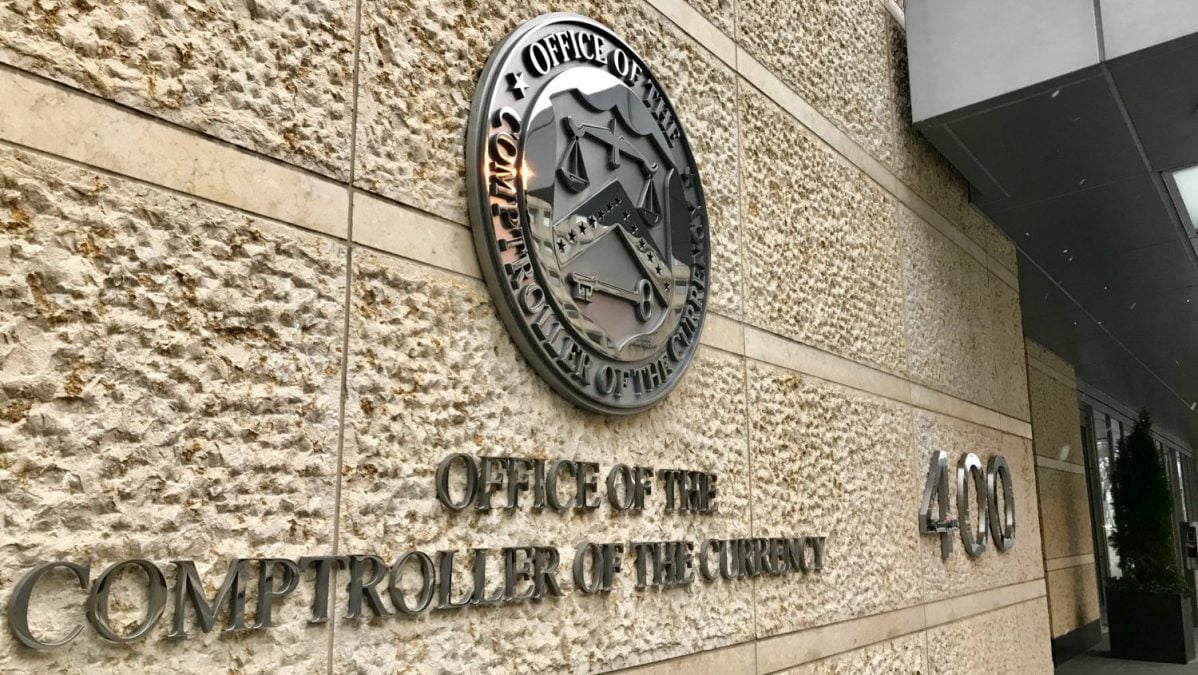
Office of the Comptroller of the Currency

The independent Treasury bureau that charters and supervises national banks, and the agency now setting the terms on which stablecoin issuers become federally regulated institutions. It has conditionally approved national trust banks for BitGo, Circle, Fidelity, Paxos, Ripple, Bridge, Crypto.com and, on 14 August 2026, World Liberty.

Kind Regulator
Jurisdiction United States
Founded 1863
Stories filed 6

The profile

The OCC is an independent bureau of the US Department of the Treasury and charters, regulates and supervises all national banks, federal savings associations and the federal branches and agencies of foreign banks. It takes no appropriations from Congress and is funded by assessments on the institutions it supervises. Jonathan V. Gould became Comptroller of the Currency on 15 July 2025. The charter that matters on this beat is the national trust bank, an uninsured national bank that limits its operations to those of a trust company and activities related thereto; Congress confirmed that authority in 1978 by amending what is now 12 USC 27(a), and the OCC reads it to cover fiduciary activities and non-fiduciary custody and safekeeping alike. The scale of that book is large and largely unremarked: the agency's own decision of 14 August 2026 records that OCC-supervised uninsured national trust banks reported $7.2 trillion in assets under administration as of 31 March 2026, $1.7 trillion of it in custody and safekeeping accounts and $5.5 trillion in fiduciary accounts. Since December 2025 the agency has granted preliminary conditional approval to a run of digital asset trust banks, and its own footnotes name them: BitGo Bank & Trust and First National Digital Currency Bank, both 12 December 2025, Fidelity Digital Assets and Paxos National Trust in the same batch, Ripple National Trust Bank on 12 December 2025, Bridge National Trust Bank on 12 February 2026 and Foris DAX National Trust Bank on 20 February 2026. Supervision of the resulting institutions sits in a Specialty Asset Supervisory Office with an Assistant Deputy Comptroller for National Trust Bank Supervision. Interpretive Letter 1183 of 7 March 2025 had already confirmed that cryptoasset custody, certain stablecoin activities and participation in independent node verification networks are permissible for its institutions, and removed the requirement to obtain supervisory non-objection first.

Frameworks and functions

National trust bank charter
An uninsured national bank limited to the operations of a trust company and activities related thereto under 12 USC 27(a). It may exercise fiduciary powers under 12 USC 92a and 12 CFR 5.26, is not an insured depository institution, and is therefore outside both FDIC insurance and the Community Reinvestment Act.
Preliminary conditional approval
The first of two stages. It authorises the organisers to form a body corporate and begin organising; the bank may not commence business until preopening requirements are met and final approval is granted under 12 USC 27(a). Approval expires if capital is not raised within 12 months or the bank does not open within 18.
Conditions imposed in writing
Conditions attached to an approval are treated as conditions imposed in writing by a Federal banking agency within the meaning of 12 USC 1818, and are enforceable as such. Recent digital asset charters carry minimum tier 1 capital, eligible liquid asset and operating expense conditions lasting three years.

Coverage

Developments in which Office of the Comptroller of the Currency is a named party, newest first.

On the record

The OCC grants a national bank charter to OpenReserve

The Comptroller granted preliminary conditional approval on 2 September 2026 to charter OpenReserve Bank, National Association, a full-service insured national bank in Salt Lake City whose plan puts tokenized capabilities across all deposit products and a wholly-owned stablecoin subsidiary not yet applied for. Capital must reach $210m and the tier 1 leverage ratio 12 per cent for three years.

Treasury proposes the GENIUS Act rules on stablecoin issuance and sale

The Treasury issued a notice of proposed rulemaking on 17 August 2026 implementing section 3 of the GENIUS Act, published the next day at 91 FR 53368 with comments due by 19 October. It would create 12 CFR part 1523, read section 18(a) to let qualifying foreign issuers issue in the United States, and treat market making in an unlawful issuance as participation in it.

OCC conditionally approves a national trust bank to issue USD1

Corporate Decision #1385 of 14 August 2026 grants preliminary conditional approval to charter World Liberty Trust Company, National Association, which would issue and redeem USD1, hold its reserve and custody digital assets as a fiduciary, assuming the issuer's role from BitGo Bank & Trust. Seven conditions attach, including $20m of tier 1 capital.

Circle receives a New York limited purpose trust charter

The New York State Department of Financial Services granted Circle Internet Trust Company LLC, trading as Circle New York Trust, a limited purpose trust charter on 31 July 2026, permitting fiduciary, custody and asset-management services under the New York Banking Law. It sits alongside the national trust bank approval the Office of the Comptroller of the Currency gave Circle on 10 July 2026.

OCC proposes rules implementing the GENIUS Act

The Office of the Comptroller of the Currency published a proposed rule implementing the GENIUS Act, codifying most requirements in a new 12 CFR Part 15 and amending Parts 3, 6, 8 and 19. The proposal covers permitted activities, reserve assets, redemption, risk management, audits, reports and supervision for permitted payment stablecoin issuers, and applies to national banks, federal savings associations, federal branches and agencies, foreign issuers and non-bank applicants for federal issuer approval.

OCC confirms national banks may provide crypto custody and execution services

In Interpretive Letter 1184 the Office of the Comptroller of the Currency confirmed that national banks and federal savings associations may hold crypto-assets in custody and buy and sell assets held in custody at a customer's direction. The letter also stated that banks may outsource bank-permissible crypto-asset custody and execution activities to third parties subject to third-party risk management, and built on the earlier Interpretive Letters 1170 and 1183.

US President's Working Group recommends stablecoin legislation

The President's Working Group on Financial Markets, with the FDIC and the OCC, recommended that Congress require stablecoin issuers to be insured depository institutions, subject custodial wallet providers to federal oversight, limit issuers' affiliation with commercial entities and promote interoperability between stablecoins. Treasury Secretary Janet Yellen said existing oversight was inconsistent and fragmented, and agencies committed to acting within current authority while legislation was pending.

OCC conditionally approves the first national trust bank charter for a digital asset firm

The Office of the Comptroller of the Currency conditionally approved the conversion of Anchorage Trust Company, a South Dakota chartered trust company, into Anchorage Digital Bank, National Association, subject to an operating agreement setting capital, liquidity and risk management expectations. The charter created a federally supervised entity able to act as custodian and, later, as issuer of record for regulated dollar tokens.

OCC allows national banks to run blockchain nodes and make stablecoin payments

The Office of the Comptroller of the Currency issued Interpretive Letter 1174, confirming that federally chartered banks and thrifts may participate in independent node verification networks and use stablecoins for payment activities, validating, storing and recording transactions. Acting Comptroller Brian Brooks said the letter "removes any legal uncertainty about the authority of banks to connect to blockchains as validator nodes and thereby transact stablecoin payments", subject to Bank Secrecy Act programmes tailored to those risks.

OCC permits national banks to hold stablecoin reserves

The Office of the Comptroller of the Currency published Interpretive Letter 1172, stating that national banks and federal savings associations may hold reserves on behalf of customers who issue stablecoins backed one-for-one by a single fiat currency in hosted wallets, with daily verification that reserve balances match tokens outstanding. Acting Comptroller Brian Brooks said banks were already handling such activity involving billions of dollars each day and the letter was meant to provide regulatory certainty.

The weekly read on onchain market economics

What issued, what settled, what the supervisors changed, with the numbers behind it and a note on what the numbers do not show. One email, Thursday mornings.

Unsubscribe in one click.