Cryptoeconomics

News, data and analysis on tokenized assets, market design and digital economic systems.

Regulator

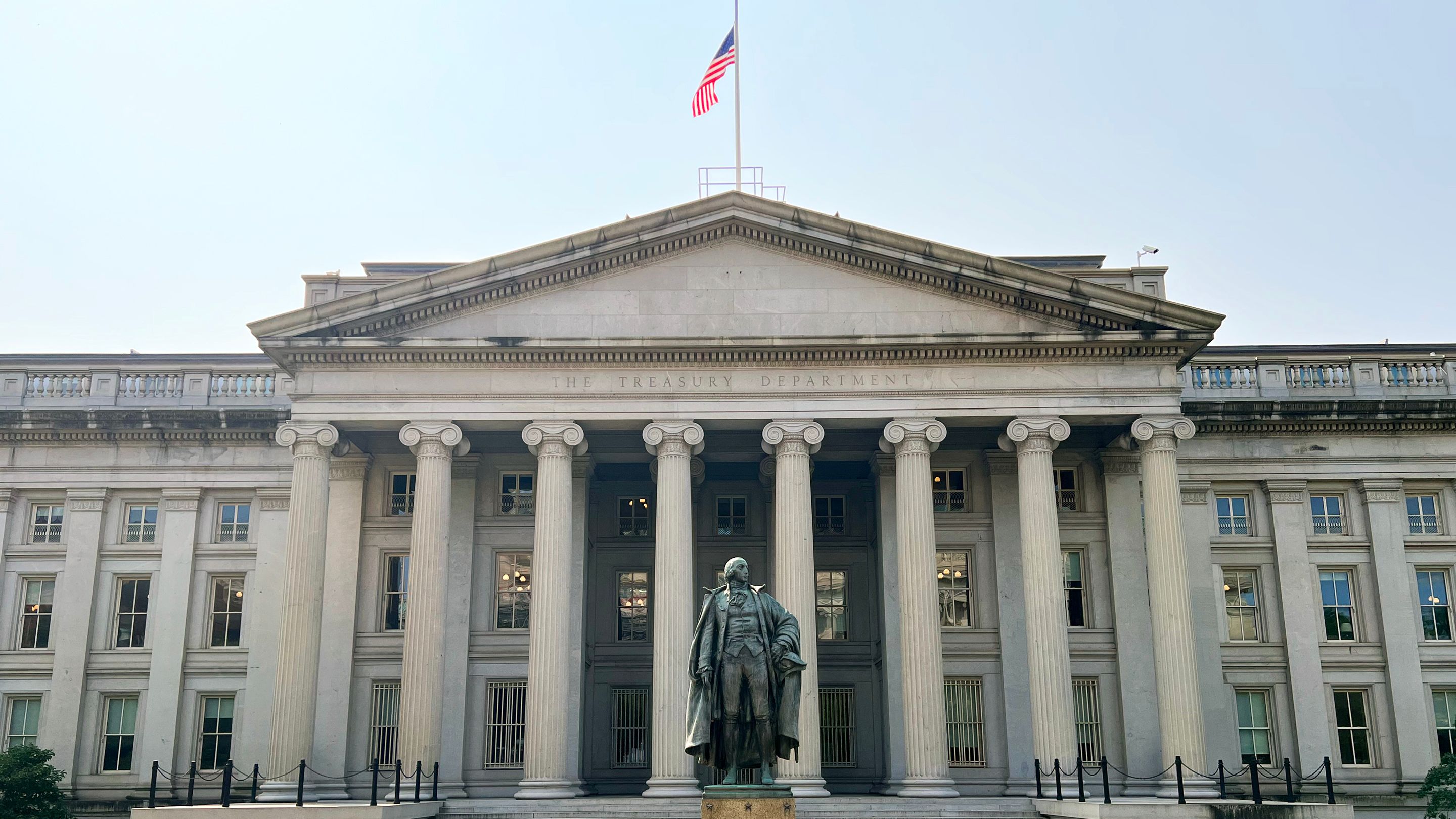
United States Department of the Treasury

Established by the first session of Congress in 1789, the executive department that issues government securities and, under the GENIUS Act, writes the rules governing permitted payment stablecoin issuers.

Kind Regulator
Jurisdiction United States
Founded 1789
Stories filed 8

The profile

The executive department established by the first session of Congress in 1789, responsible for federal revenue, the issuance of government securities through the Bureau of the Fiscal Service, and, under the GENIUS Act, for the rules governing permitted payment stablecoin issuers. On 3 April 2026 it proposed principles for judging whether a state regime is 'substantially similar' to the federal framework, the test that decides whether an issuer with less than $10bn outstanding may remain under state supervision, subject to a unanimous determination by the Stablecoin Certification Review Committee. On 8 April 2026 its Financial Crimes Enforcement Network and Office of Foreign Assets Control jointly proposed treating permitted issuers as financial institutions under the Bank Secrecy Act, with anti-money-laundering and sanctions programme obligations; the department therefore both supplies the reserve assets these tokens hold and sets the conditions on holding them.

Frameworks and functions

GENIUS Act state-regime certification
Proposed standards under which a state stablecoin regime may be certified as substantially similar to the federal framework, requiring a unanimous decision of the Stablecoin Certification Review Committee.
FinCEN and OFAC stablecoin compliance rule
April 2026 proposal treating permitted payment stablecoin issuers as Bank Secrecy Act financial institutions with anti-money-laundering and sanctions programme requirements.
Marketable Treasury securities
Bills, notes and bonds issued through the Bureau of the Fiscal Service, the assets that dominate permitted stablecoin reserve portfolios.

Coverage

Developments in which United States Department of the Treasury is a named party, newest first.

On the record

Senate Republicans publish the final Clarity Act text before a cloture vote

Lummis, Boozman and Scott released a 635 page substitute for H.R. 3633, claiming 126 changes requested by Democrats. Read against the 10 September version, the ethics sunset of noon on 20 January 2029 is gone, the developer shield no longer reaches 18 U.S.C. 1960, and the Treasury circuit-breaker on stablecoin rewards must be triggered within 18 months of enactment.

Ways and Means introduces the Digital Asset Tax Certainty Act and sets it for markup

H.R. 10357 rewrites the tax treatment of digital assets across seven titles and was noticed for a vote on 16 September. Its wash sale extension applies to dispositions after the date of introduction, the par rule for licensed dollar stablecoins from 2027, and the $10 de minimis fee exception and simplified accounting election from 2028.

Revised Clarity Act text would put controlled DeFi protocols under the CFTC

Senator Cynthia Lummis published a 630 page substitute amendment to H.R. 3633 ahead of a Senate vote on 15 September. It requires rules for persons who control a non-decentralized finance trading protocol to register with the CFTC and to comply with the Bank Secrecy Act, and preempts state securities and commodities law over protected developer activities.

FinCEN puts $12.7bn of reported activity behind digital asset investment scams

The Treasury's Financial Crimes Enforcement Network published a Financial Trend Analysis and an alert on 3 September 2026 covering 33,904 Bank Secrecy Act reports filed from 8 September 2023 to 31 December 2025 and about $12.7bn of reported activity. Its finding for this beat is that proceeds were nearly always converted into stablecoins, almost exclusively USDT.

The G20 commits to clear pathways for digital assets innovation

Finance ministers and central bank governors meeting in Asheville on 31 August and 1 September 2026 committed to frameworks that establish clear pathways for sound digital assets innovation, named three Financial Stability Board outputs they are waiting for and asked the FATF to prioritise jurisdictions with significant virtual assets use. China did not join the statement.

OFAC applies Executive Order 13902 to Iran's digital asset sector

A one-page determination effective 24 August 2026 extends section 1(a)(i) of Executive Order 13902 to the aviation, digital asset, gold, shipping and technology sectors of the Iranian economy, so any person anywhere operating in them may be designated. The same rule suspends five general licences indefinitely, including the one authorising noncommercial personal remittances to Iran.

Treasury proposes the GENIUS Act rules on stablecoin issuance and sale

The Treasury issued a notice of proposed rulemaking on 17 August 2026 implementing section 3 of the GENIUS Act, published the next day at 91 FR 53368 with comments due by 19 October. It would create 12 CFR part 1523, read section 18(a) to let qualifying foreign issuers issue in the United States, and treat market making in an unlawful issuance as participation in it.

OCC proposes rules implementing the GENIUS Act

The Office of the Comptroller of the Currency published a proposed rule implementing the GENIUS Act, codifying most requirements in a new 12 CFR Part 15 and amending Parts 3, 6, 8 and 19. The proposal covers permitted activities, reserve assets, redemption, risk management, audits, reports and supervision for permitted payment stablecoin issuers, and applies to national banks, federal savings associations, federal branches and agencies, foreign issuers and non-bank applicants for federal issuer approval.

US Treasury opens GENIUS Act implementation rulemaking

The Department of the Treasury issued an advance notice of proposed rulemaking on implementing the GENIUS Act, with comments due by 20 October 2025. It sought input on issuance, reserve and marketing rules for stablecoin issuers and service providers, illicit finance controls, the treatment of foreign payment stablecoin issuers, taxation, insurance and cost and benefit estimates.

US President's Working Group recommends stablecoin legislation

The President's Working Group on Financial Markets, with the FDIC and the OCC, recommended that Congress require stablecoin issuers to be insured depository institutions, subject custodial wallet providers to federal oversight, limit issuers' affiliation with commercial entities and promote interoperability between stablecoins. Treasury Secretary Janet Yellen said existing oversight was inconsistent and fragmented, and agencies committed to acting within current authority while legislation was pending.

The weekly read on onchain market economics

What issued, what settled, what the supervisors changed, with the numbers behind it and a note on what the numbers do not show. One email, Thursday mornings.

Unsubscribe in one click.