Cryptoeconomics

News, data and analysis on tokenized assets, market design and digital economic systems.

Legislature

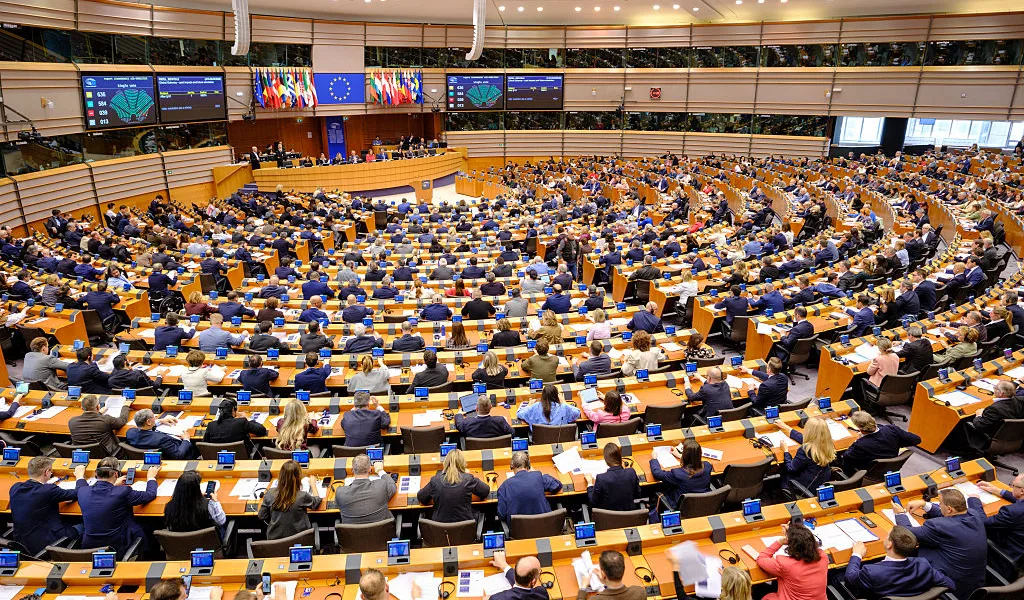
European Parliament

The directly elected chamber that legislates alongside the Council of the European Union, and whose economic affairs committee adopted its digital euro position on 23 June 2026, giving the Commission rather than the European Central Bank the power to set holding limits.

Kind Legislature
Jurisdiction European Union
Stories filed 1

The profile

The directly elected chamber that acts with the Council of the European Union as co-legislator under the ordinary legislative procedure, handling financial files through its Committee on Economic and Monetary Affairs. That committee adopted its position on the digital euro regulation (2023/0212(COD)) on 23 June 2026, more than six months after the Council agreed its own negotiating stance in December 2025; the committee text distinguishes an offline version with stronger privacy from the online one and would give the Commission rather than the European Central Bank the power to set holding limits, which were still undetermined at that point. Because the holding limit governs how much retail deposit money could migrate to a central bank liability, the Parliament and Council jointly decide the digital euro's effect on commercial bank funding and on the room left for euro stablecoins; a plenary position was expected in early July 2026 and negotiators were targeting agreement before the end of the year, with issuance envisaged by 2029.

Frameworks and functions

Committee on Economic and Monetary Affairs (ECON)
Committee that drafts the Parliament's amendments on banking, payments and crypto-asset files and negotiates them with the Council.
Legislative Train Schedule
Published tracker recording the stage, rapporteur and deadlines of each legislative file, including the digital euro regulation.

Coverage

Developments in which European Parliament is a named party, newest first.

On the record

EU negotiators reach provisional agreement on the Markets in Crypto-Assets Regulation

The Council presidency and European Parliament negotiators agreed a provisional text of MiCA, covering issuers of asset-referenced and e-money tokens and crypto-asset service providers. The text required stablecoin issuers to hold a liquid reserve at a 1:1 ratio, set a three-month deadline for national authorities to decide on authorisation applications, and gave ESMA a register of non-compliant operators.

The weekly read on onchain market economics

What issued, what settled, what the supervisors changed, with the numbers behind it and a note on what the numbers do not show. One email, Thursday mornings.

No tracking pixels. Unsubscribe in one click. We do not sell or share the list.